

Implant bridges in Brisbane
A few missing teeth, one fixed answerSeveral new teeth on a couple of implants, placed under sedation.
When a few teeth in a row are missing, you don't need an implant for every single one. An implant bridge fills the whole gap with teeth that stay in, and the surgery happens in a day surgery under sedation.
- Sedated for all of it, with an anaesthetist
- Fewer implants than teeth
- Fixed written quote after your scan
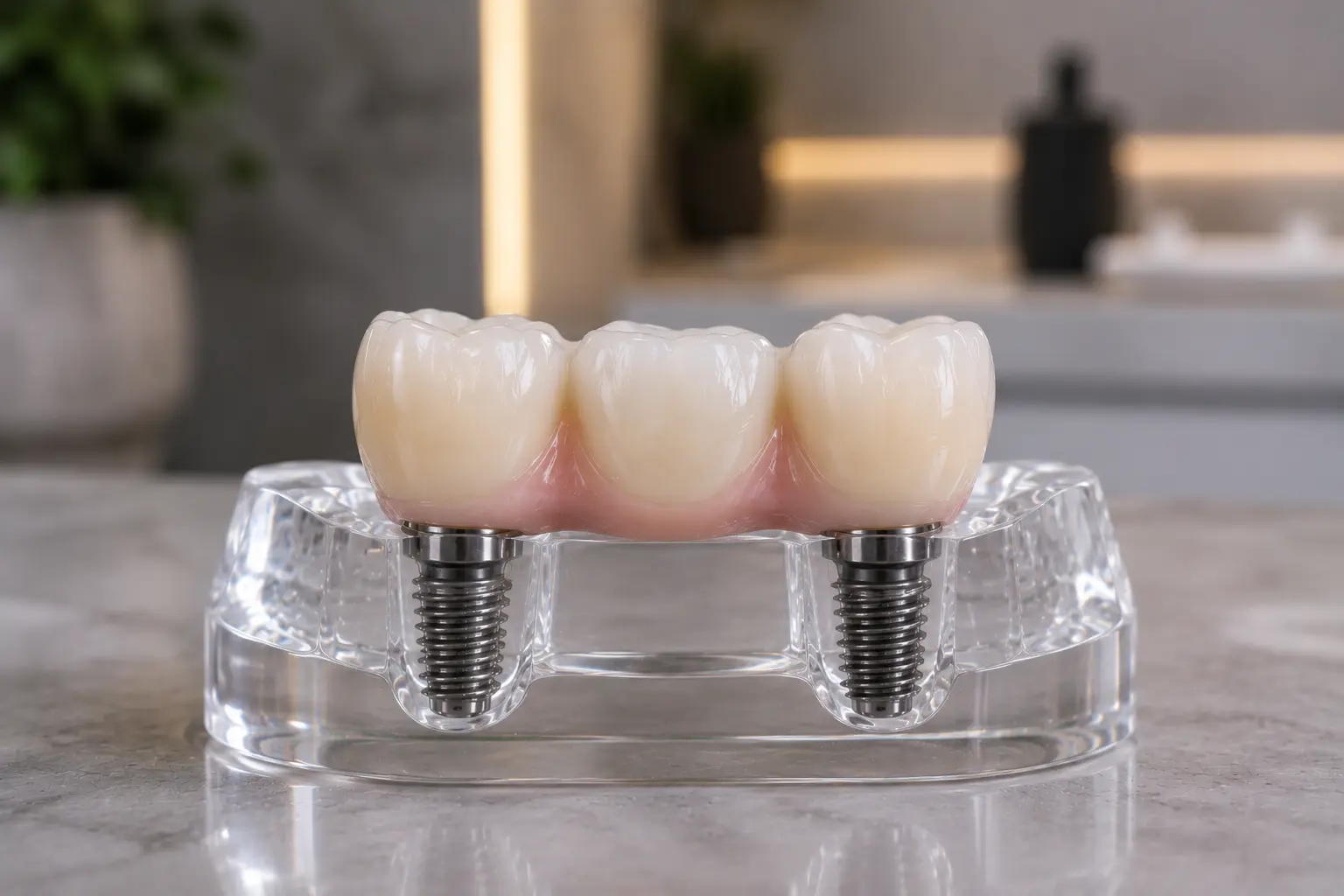
Three new teeth
Just two implants
That's the trick of a bridge. The teeth in the middle are carried by the implants either side, so the whole row stays firmly in place.
The clever bit
Why you don't need an implant for every tooth
A bridge borrows an old engineering idea: strong supports at each end can carry what's in between. Flick the switch and watch what changes, and what doesn't.
- Same number of new teeth, same fixed feel when you chew and smile.
- Fewer implants placed, which usually means gentler surgery and a lower cost.
- Still one morning under sedation. However many implants you need, they're placed in a single session.
Three missing teeth, two ways
Flick between the two
One implant under each tooth. Strong and simple, and sometimes it's the right call, especially for scattered gaps.
Is this you?
The stories behind most bridges
Missing a few teeth changes small daily habits: what you order, which side you chew on, how wide you smile. Tap any that feel familiar. No judgment here, ever.
This is exactly what a bridge is for. One fixed row of new teeth fills the whole gap at once, carried by an implant at each end. One surgery, one quiet healing stretch, one finished smile.
Missing back teeth do that quietly. A bridge rebuilds the chewing side you lost, so steak, apples and crusty bread stop being foods you plan around.
Hard news, but it comes with a plan. Dr Niels can often remove the failing teeth and place the implants in the same session, so you only need sedation once and never left without a plan for the gap.
You're in good company. An implant bridge has no clasps, no plate across your palate and nothing to take out at night. It stays in, full stop, and most people say that's life-changing.
Scattered gaps instead of a row? Sometimes single implants suit better than a bridge. Dr Niels will map the right mix for your mouth at your consultation, in plain English.
Not quite your shape of gap?
If a bridge isn't the right fit
A bridge suits a row of missing teeth. If your gaps are scattered, or most of a jaw is missing or failing, one of these is probably your answer, and both still happen under sedation.
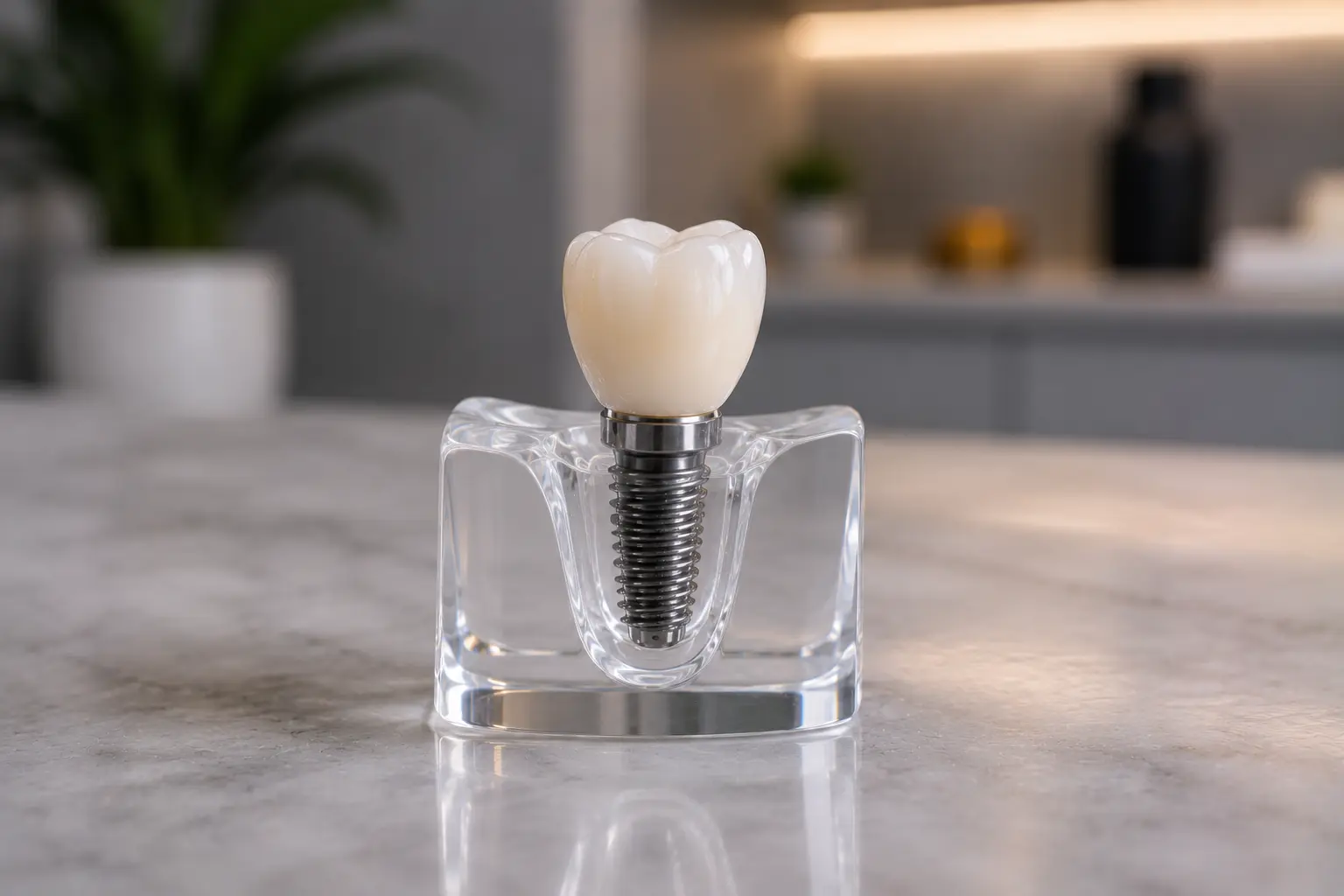
One tooth at a time
Single implants
When your gaps are scattered rather than in a row, each missing tooth gets its own implant and its own new tooth, standing completely on its own.
- Every tooth independent of its neighbours
- Cleaned exactly like your natural teeth
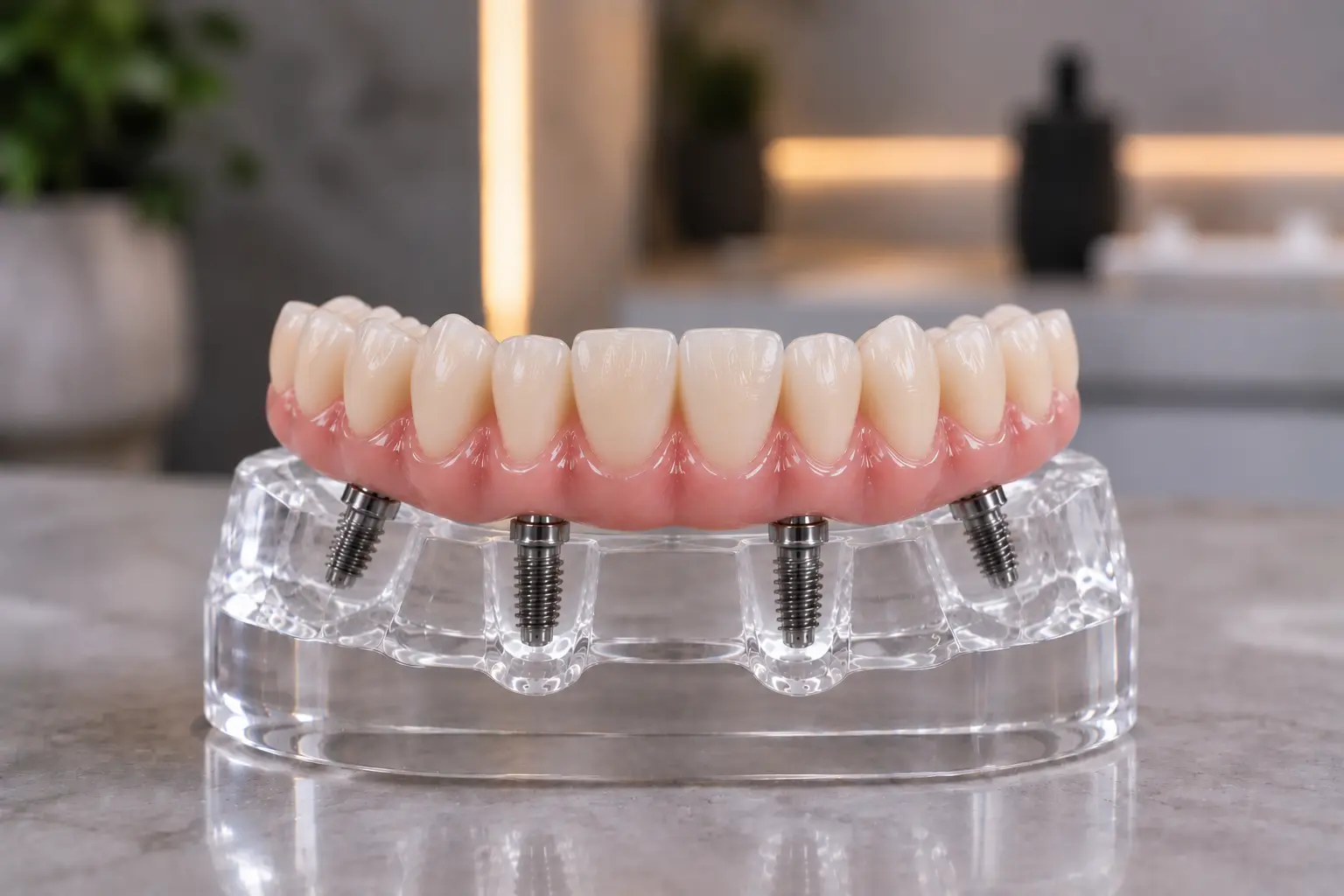
A whole new smile
All-on-X, a full arch
When most or all of the teeth in a jaw are missing or failing, a handful of implants can hold a complete fixed set of new teeth. One arch, one clear surgical fee, placed in one session under sedation.
- A full set that stays in, no taking it out at night
- Often costs less than many single implants
- Surgery and teeth in one guide price
The part that makes us different
Sedated for all of it
However many implants your bridge needs, they're placed in one session at Dormir Group Surgical Centre in Chermside, which we operate out of, while you're under IV sedation or general anaesthetic. You settle into sedation, and most people remember very little until recovery.
Compare your sedation options- An anaesthetist watches over you
A Medical Anaesthetist whose only job is you, the whole way through.
- A day surgery, not a dental chair
A proper theatre, with a quiet recovery room to rest in afterwards.
- Home the same day
You come round gently, rest a while, then head home with your support person.
The journey
Four gentle steps to your new teeth
A bridge follows the same calm road as a single implant, just with more than one tooth waiting at the end. Here it is, start to finish.
-
1
About an hour
Consultation and 3D scan
A relaxed chat and a detailed 3D scan. Dr Niels maps which teeth are going where and how many implants your bridge needs, and you leave with a fixed written quote.
How it feels: like a conversation, not a procedure. Nothing happens on this day.
-
2
One morning
Implants placed, under sedation
All your implants go in during one session at the day surgery, under IV sedation or general anaesthetic. Any teeth that can't be saved can often come out in the same session.
How it feels: your sedation starts, and most people remember very little until recovery. For most people the day feels strangely easy.
-
3
A few months
Quiet healing time
Under the gum, your bone grips each implant until it's rock solid. You live completely normally, with options to cover the gap while you wait.
How it feels: like nothing. This step is mostly just time passing.
-
4
A short visit
Your bridge is fitted
Your custom-made row of teeth is attached to the implants, your bite is checked until it feels right, and that's it. No sedation needed for this gentle visit.
How it feels: like getting a whole corner of your mouth back at once.
Your timing may differ a little. Healing depends on your mouth, and a bone graft can add a step. Dr Niels will map your exact journey at your consultation, in plain English.
What happens on the day
Your day, from arriving to heading home.
Not knowing what happens is most of the fear, so here is the whole day, step by step. Walk through it at your own pace.
Step 1 · Before the day
Everything arrives in writing first.
Your written plan tells you exactly when to stop eating and drinking, what to bring, and what to leave at home. You will have organised someone to take you home, and if any question comes up in between, you can just call us.
Step 2 · Arriving
A quiet arrival, not a waiting room.
You come to the day surgery in the morning, and someone who knows you are coming meets you. The paperwork is mostly already done. There is no sitting in a row of chairs listening to a dental clinic at work.
Step 3 · Settling in
You meet the person who watches over you.
You settle in, change into something comfortable, and meet your anaesthetist, the person whose only job today is you. Ask them anything at all. Someone can stay with you right up until your sedation starts.
Step 4 · Sedation starts
A small drip, and you settle into sedation.
A small drip goes into the back of your hand, a quick scratch and it is done. For most people it simply feels like getting heavier. There is nothing you have to do, and nothing you have to be brave about.
Step 5 · During treatment
The work happens. You are watched the whole time.
While you're sedated, Dr Niels does the agreed treatment, and the anaesthetist watches your breathing, heart rate and oxygen without a break. Long appointments pass easily when you're deeply relaxed.
Step 6 · Coming round
You come round slowly, with it done.
You come round in the recovery room with a nurse nearby, and you take as long as you need. Feeling groggy is normal and it passes. Most people are surprised how gentle this part is.
Step 7 · Heading home
Someone you trust takes you home.
Once you are ready, the person you organised drives you home, with written instructions for the evening, what to eat, and how to take it easy. We check in with you the next day to see how you are going.
Every day surgery day runs to a plan, and the exact times for yours come with your written treatment plan, so there is no guesswork on the morning.
Ways to pay
More than one way to pay for it.
You will always have a fixed written quote, with item numbers, before anything is booked. When it comes to paying, these are the options we work with.
-

SuperCare
For eligible patients, SuperCare manages the application to access superannuation for approved dental treatment, including the paperwork with the ATO.
Eligibility criteria apply
-

MediPay
Payment plans for dental treatment, often sorted within a day, with funds paid directly to the clinic. You will know the full cost of your treatment before you commit to anything.
Subject to approval · terms apply
-

Health funds & Medicare
Some surgical items attract Medicare or health fund rebates. Your quote includes the item numbers, so you can check exactly what your fund pays before you decide.
Depends on your cover
Every option has its own terms and approval process, and we will walk you through what applies to you. MediPay is a credit provider. Accessing superannuation early affects your retirement savings, so we recommend independent financial advice before going down that path.
Reach out
Want to enquire, or just find out more?
Send a question, any question. A real person reads it and gets back to you. No follow-up calls you did not ask for, and no pressure to book anything.
Or call us on (07) 3272 6056Outside hours, the chat in the corner can answer most questions straight away.
Questions
Implant Bridge questions, answered
The questions people most often ask us about implant bridges, with straight answers.
Still wondering about something?
Ask us anything. There are no silly questions here.
It depends on how many teeth are missing and where they are. A common example is two implants carrying three or four teeth, but your 3D scan is what decides it, and your written quote shows the exact number before anything goes ahead.
Yes. Your implants are placed in one session at Dormir Group Surgical Centre in Chermside, which we operate out of, under IV sedation or general anaesthetic, with a Medical Anaesthetist watching over you the whole time.
Often, yes. Dr Niels can usually remove teeth that can't be saved and place your implants in the same session, so you only need sedation once and you're never left without a plan for the gap.
An implant bridge is fixed and chews confidently, and for a row of missing teeth it's usually the sensible choice. Where your bite or bone suits single implants better, Dr Niels will say so plainly at your consultation.
Usually, because you're paying for fewer implants than teeth. A bridge is priced per implant plus the bridge itself, and your quote lays out the exact mix so you can compare before deciding.
Mostly like your own teeth: brushing twice a day, plus a small brush or floss threader for under the bridge, which we'll show you how to use. It quickly becomes a ten-second habit.
With good care, implant bridges can last for decades. Like natural teeth, they need regular check-ups and cleans over the years, which are charged separately, and your home care makes a real difference.
The row of teeth is custom-made and colour-matched to the rest of your smile, shaped to sit naturally against your gums. Most people stop noticing it's there, and so does everyone else.
Very often, yes, and it's one of the happiest switches we see. Bone can shrink where teeth have been missing a while, so some people need a bone graft first, which your 3D scan will show clearly.
You're sedated while the implants are placed, and the area is fully numbed as well. Afterwards, some tenderness for a few days is normal, and most people manage comfortably with simple pain relief.
Still wondering about something?
Ask us anything. There are no silly questions here.
No matches. Try another word, or give us a call.