

Implant-Retained Dentures

Implant-retained dentures in Brisbane, for a secure, confident fit

Sometimes called snap-in or clip-in dentures, they lock onto dental implants instead of resting on your gums. No adhesive, no plate across your palate, and no bracing yourself when you bite into something. The implants are placed under IV sedation or general anaesthetic at Dormir Group Surgical Centre in Chermside, which we operate out of.

  • Sedated while your implants are placed
  • Dormir Group Surgical Centre, run to ANZCA standards
  • Fixed quote before anything goes ahead
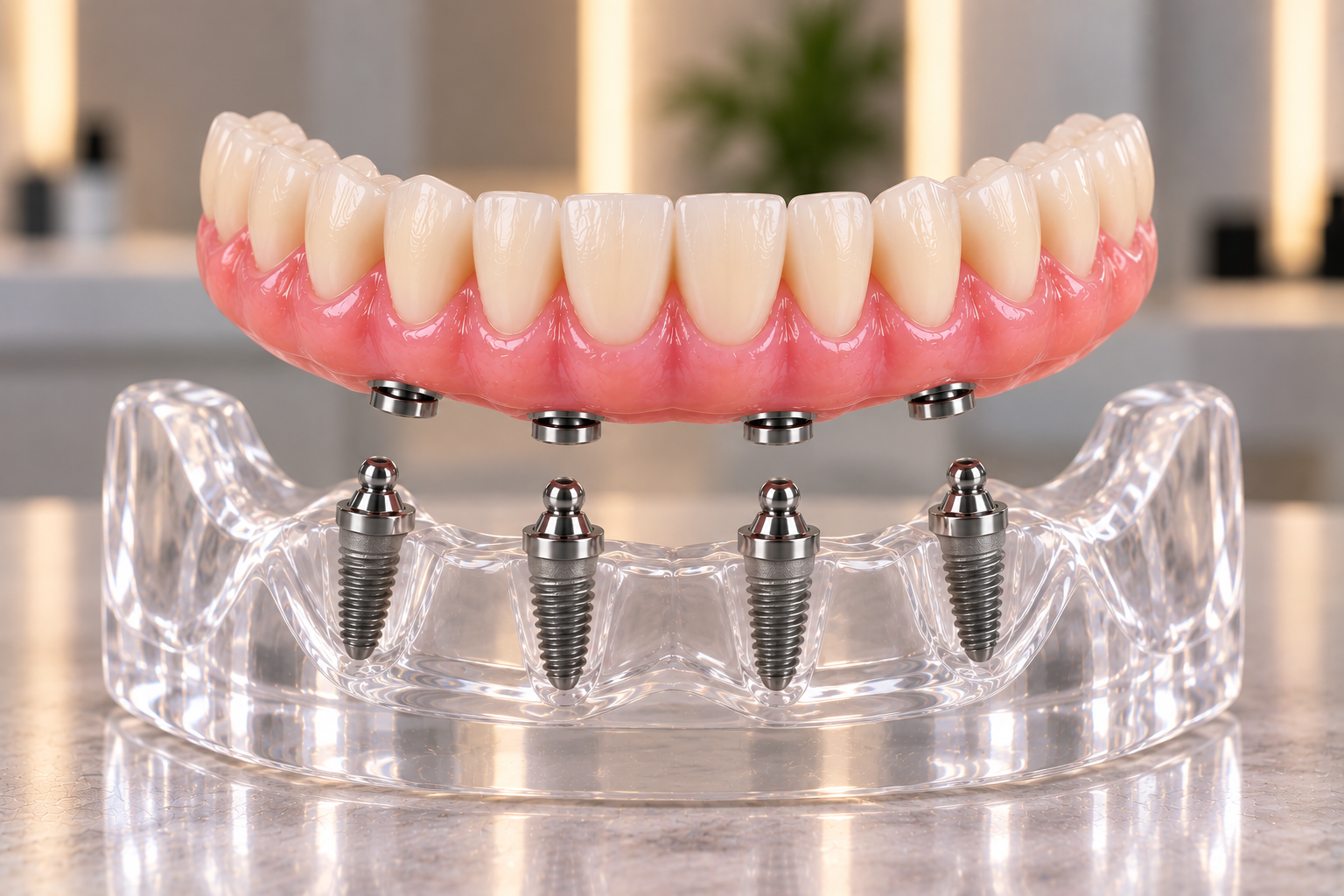
Implant-retained denture model showing how the denture clips onto dental implants

What They Are

A denture that clicks onto implants, not onto hope

Two to four small titanium implants are placed in your jaw and act as anchors. Your denture then clips onto them and stays exactly where it should, through meals, conversations and everything else. It still comes off when you want it to, for cleaning, but never on its own.

How it holds on

The implants work like press studs. The denture clicks down onto them with a firm, positive hold, so it doesn’t rock, drift or lift when you bite into something you’d normally avoid.

Nothing like your nan’s dentures

No adhesive, and for most upper dentures, no plate covering the roof of your mouth, so food tastes like food again. It’s slimmer, more secure and made to be forgotten about.

Easy to live with

It unclips for cleaning, so looking after it is simple: brush the denture, keep the implants clean, done. We’ll show you exactly how before you leave.

Already wearing full dentures and fed up with them? You’re likely a good candidate. A consultation and 3D scan shows exactly what your jaw can support, and sometimes your existing denture can even be adapted.

Clip-In Or Fixed

Clip-in denture, or fixed All-on-X?

Both give you a full arch of teeth anchored to implants, and both are placed under sedation. The real difference is simple: one comes out when you choose, the other stays in for good. Here’s how they compare.
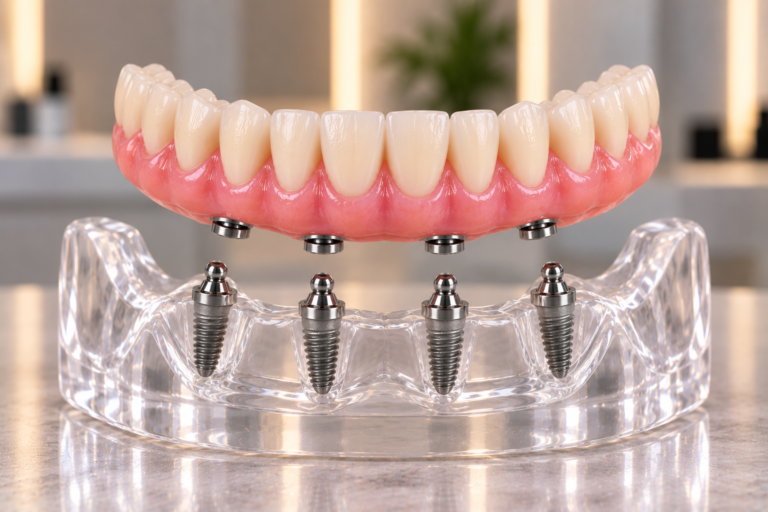
Implant-retained denture model showing how the denture clips onto dental implants
Removable

Implant-retained denture

Clips firmly onto implants, unclips when you want it to.

  • Holds onto 2 to 4 implants, firm through meals and conversation
  • Comes out for easy cleaning, goes back in with a click
  • No adhesive, and usually no plate across the palate
  • Often the right call when fewer implants suit your jaw
  • Clip inserts are refreshed at routine visits to keep the hold firm
You’re on the right page
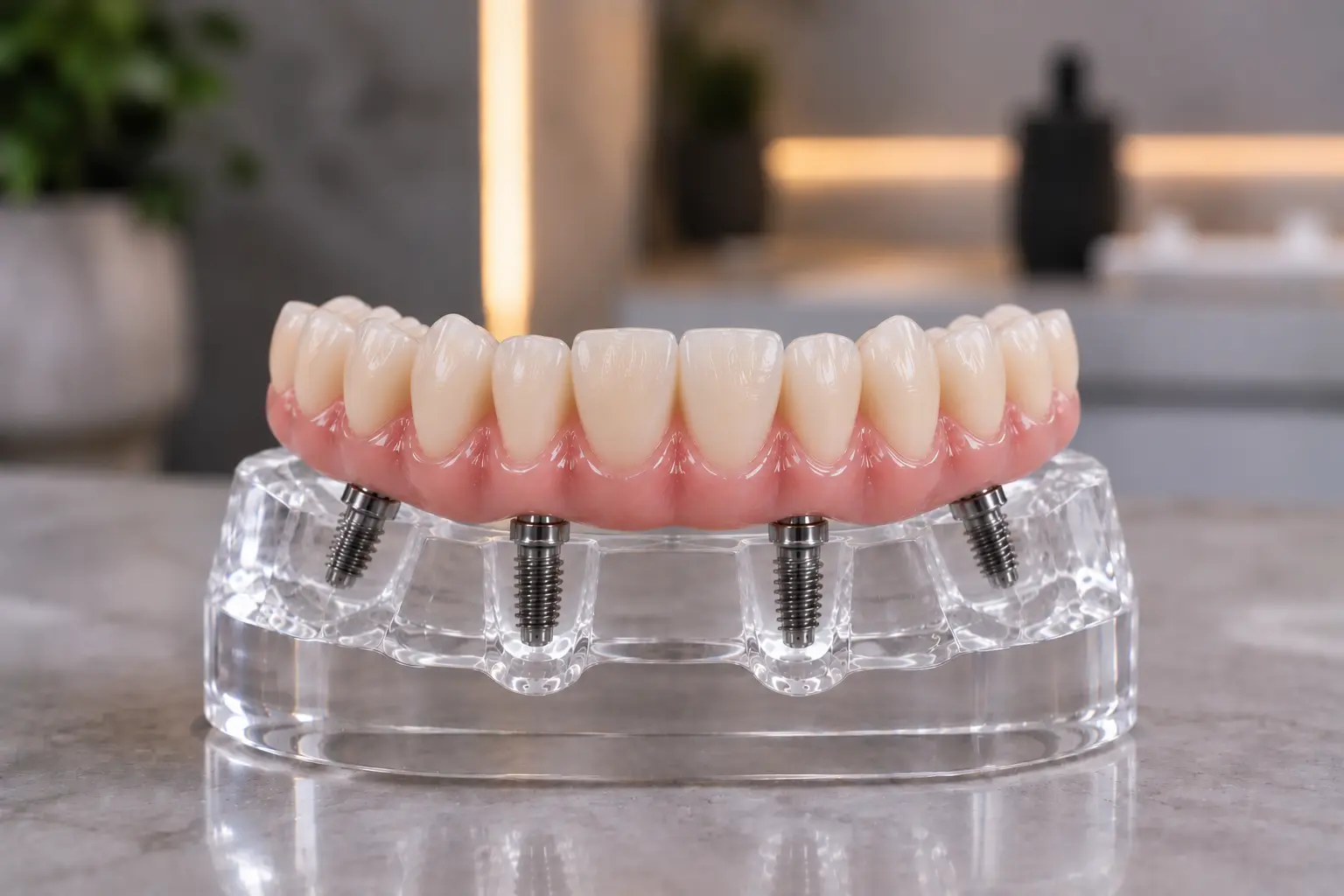
Model of a full arch of new teeth fixed to implants, often called All-on-X
Fixed

All-on-X fixed teeth

Fixed to implants permanently, never comes out.

  • Fixed to 4 to 6 implants, stays in around the clock
  • Brushed in your mouth, like natural teeth
  • The closest feel to natural teeth dentistry offers
  • Usually placed in a single appointment where the scan allows
  • Nothing to take out, soak or keep by the bed
About All-on-X

Which one is right comes down to your jaw, your scan and how you want to live with your teeth. At your consultation you’ll see both options mapped out for you, with a clear recommendation and a fixed written quote for each, before you decide anything.

The Sedation Part

Sedated for the surgical part, every time

The only surgical step in this whole treatment is placing the implants, and that happens under IV sedation or general anaesthetic, in the care of a Medical Anaesthetist. Everything after that is gentle, simple and done in an ordinary chair.

Implants placed under sedation

Done at Dormir Group Surgical Centre in Chermside, which we operate out of. The day surgery is run to ANZCA guidelines and standards, with an anaesthetic team monitoring you the whole time. Most people remember very little of the procedure.

Fittings are the easy visits

Shaping and fitting your clip-in denture happens at short, simple appointments. Nothing surgical, nothing to dread, just adjustments until the fit feels right.

Home the same day

After your implant appointment you rest in a dedicated recovery room with nurses beside you, take your time, then head home with someone you trust. No overnight stays.

The surgical part happens under sedation. The rest is just fittings.

How It Works

From consultation to a secure, final fit

1

Consult and 3D scan

We look at what your jaw can support and you get a fixed written quote. No pressure, no surprises.

2

The sedation appointment

Your implants are placed under IV sedation or general anaesthetic at Dormir Group Surgical Centre in Chermside, which we operate out of. Home the same day.

3

Quiet healing

Over the following months the implants settle into the bone. You’re never left without teeth while that happens.

4

Fitting day

Your new denture clicks onto the implants and we adjust it until it feels right. Short, simple visits, nothing surgical.

What happens on the day

Your day, from arriving to heading home.

Not knowing what happens is most of the fear, so here is the whole day, step by step. Walk through it at your own pace.

Step 1 · Before the day

Everything arrives in writing first.

Your written plan tells you exactly when to stop eating and drinking, what to bring, and what to leave at home. You will have organised someone to take you home, and if any question comes up in between, you can just call us.

Step 2 · Arriving

A quiet arrival, not a waiting room.

You come to the day surgery in the morning, and someone who knows you are coming meets you. The paperwork is mostly already done. There is no sitting in a row of chairs listening to a dental clinic at work.

Step 3 · Settling in

You meet the person who watches over you.

You settle in, change into something comfortable, and meet your anaesthetist, the person whose only job today is you. Ask them anything at all. Someone can stay with you right up until your sedation starts.

Step 4 · Sedation starts

A small drip, and you settle into sedation.

A small drip goes into the back of your hand, a quick scratch and it is done. For most people it simply feels like getting heavier. There is nothing you have to do, and nothing you have to be brave about.

Step 5 · During treatment

The work happens. You are watched the whole time.

While you're sedated, Dr Niels does the agreed treatment, and the anaesthetist watches your breathing, heart rate and oxygen without a break. Long appointments pass easily when you're deeply relaxed.

Step 6 · Coming round

You come round slowly, with it done.

You come round in the recovery room with a nurse nearby, and you take as long as you need. Feeling groggy is normal and it passes. Most people are surprised how gentle this part is.

Step 7 · Heading home

Someone you trust takes you home.

Once you are ready, the person you organised drives you home, with written instructions for the evening, what to eat, and how to take it easy. We check in with you the next day to see how you are going.

Every day surgery day runs to a plan, and the exact times for yours come with your written treatment plan, so there is no guesswork on the morning.

Ways to pay

More than one way to pay for it.

You will always have a fixed written quote, with item numbers, before anything is booked. When it comes to paying, these are the options we work with.

  • SuperCare

    For eligible patients, SuperCare manages the application to access superannuation for approved dental treatment, including the paperwork with the ATO.

    Eligibility criteria apply

  • MediPay

    Payment plans for dental treatment, often sorted within a day, with funds paid directly to the clinic. You will know the full cost of your treatment before you commit to anything.

    Subject to approval · terms apply

  • Health funds & Medicare

    Some surgical items attract Medicare or health fund rebates. Your quote includes the item numbers, so you can check exactly what your fund pays before you decide.

    Depends on your cover

Every option has its own terms and approval process, and we will walk you through what applies to you. MediPay is a credit provider. Accessing superannuation early affects your retirement savings, so we recommend independent financial advice before going down that path.

Reach out

Want to enquire, or just find out more?

Send a question, any question. A real person reads it and gets back to you. No follow-up calls you did not ask for, and no pressure to book anything.

Or call us on (07) 3272 6056

Outside hours, the chat in the corner can answer most questions straight away.

What's it about?

Questions

Implant denture questions, answered

The questions people most often ask us about clip-in implant dentures, with no sugar-coating.

Still wondering about something?

Ask us anything. There are no silly questions here.

Yes, that's the point of it. The denture clicks onto the implants with a firm, positive hold, so it doesn't rock or lift the way an ordinary denture can. There's a short settling-in period while you get used to it, and most people find themselves eating foods they'd quietly given up on.

Yes. The implant placement is the only surgical step, and it happens under IV sedation or general anaesthetic at Dormir Group Surgical Centre in Chermside, which we operate out of. The day surgery runs to ANZCA guidelines and standards, with Fully Qualified Medical Anaesthetists caring for you throughout.

Usually two to four per jaw. Lower dentures often hold well on two, upper dentures usually need more. Your 3D scan decides the exact number for your jaw, and your written quote shows it before anything goes ahead.

Sometimes, if it's in good condition and fits well. Often the better result comes from a new denture made to sit precisely on the implants. We'll assess yours at the consultation and give you an honest answer either way.

Usually not. The jawbone does shrink after years under a denture, but in most cases there's still enough to work with, and where there isn't, bone can often be rebuilt with a graft under sedation. The 3D scan gives you a definite answer.

It unclips, which makes cleaning simple: brush the denture, keep the implants and gums clean, click it back in. We'll show you the routine before you leave and give you clear guidance on wearing it overnight.

The small inserts inside the clips do wear with daily use, and that's normal. They're refreshed in minutes at routine visits, which keeps the hold feeling firm. The implants themselves are built to last for decades with good care.

Still wondering about something?

Ask us anything. There are no silly questions here.